Overview
We’ve all heard it a million times—companies proudly declaring that they’ve hired “the best team” or “the best talent” in their industry. From startups to global corporations, from recruiting companies to tech beasts, from the USA to NZ, there are some who constantly bleat about the ‘fact’ they’ve assembled an Avengers-level squad of all-stars. But let’s take a step back and ask ourselves: Why is every organisation so obsessed with claiming they’ve got “the best”? And, more importantly, does it really matter?
The Myth of the "Best Team"
The obsession with being “the best” is a deeply ingrained mentality, often borrowed from the world of competitive sports, where teams and athletes constantly strive to be number one. But in the corporate world, this concept becomes flawed. Claiming to hire the “best” assumes that success comes from simply having superior talent, as if the people you bring on board are naturally equipped to outperform everyone else.
But here’s the truth: everyone has good people. What sets truly successful organisations apart is not their talent pool but how they allow that talent to thrive.
Why Everyone Claims to Have the Best
There’s a certain allure to saying you’ve got the best team. It signals to competitors, customers, and even future employees that your company is on top of its game. It’s also a morale boost internally—who wouldn’t want to believe they’re part of an elite group? But this mindset can be dangerous.
Overconfidence: When companies are too focused on being “the best,” they often neglect the day-to-day work of making sure their people are actually able to perform at their best. They assume talent alone will carry them.
Blindness to weaknesses: Organisations that constantly push the “best team” narrative can become blind to their own shortcomings. After all, if you have the best people, why would you need to improve?
Pressure and burnout: When employees are labelled as “the best,” there’s an unspoken pressure to perform at an unrealistic level, leading to stress, burnout, and decreased morale. Suddenly, “the best” becomes a self-imposed weight.
Talent Alone Doesn't Win Championships: A Lesson from Pro Sports
Look at any professional sports league, and you’ll see teams stacked with incredible athletes. But having the best players on paper doesn’t guarantee victory. A quick comparison of pro sports teams shows us how flawed this thinking can be.
Take the Brooklyn Nets from the NBA in recent years—loaded with all-star talent like Kevin Durant, Kyrie Irving, and James Harden. On paper, they were unbeatable, yet they never won a championship. And the teams that do win the championships are not overly represented in the ‘All Stars Team’ because the ‘stats’ don’t support ‘team players’ as much as ‘individual stars.’ These teams allowed their players to thrive in a system that focused on collaboration and strategic execution, not just individual brilliance.
In professional sports, it’s the system, coaching, and culture that allows great players to perform at their best. It’s not just about who has the best roster on paper—it’s about who can pull it all together to create a winning team dynamic. And in business that equates to the processes, leadership and culture. Good processes is industry content, so we’ll leave that to you to decide, but the other two are a constant for any organisation.
Good People Need the Right Environment
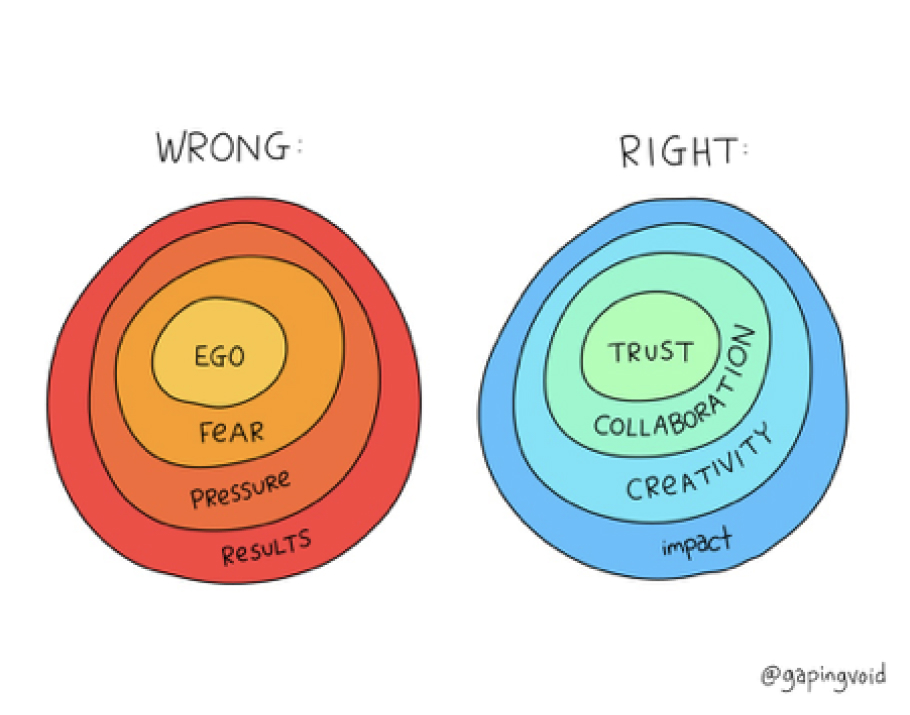
In truly effective organisations, success is not about simply having the most talented individuals but about fostering a culture that brings out the best in everyone. Rather than encouraging a competitive, oppositional, or perfectionistic mindset, these organisations focus on creating an environment where individuals can collaborate, communicate openly, and feel empowered. Through clear goal alignment, effective leadership, and a commitment to interpersonal relationships, they build trust and mutual respect. This allows teams to focus on problem-solving rather than fault-finding, and encourages innovation without the fear of failure. By emphasising personal development and learning agility, these organisations nurture a culture where individuals are motivated by growth, mastery, and shared success—qualities that make for not just a good team, but a highly constructive one. And constructive teams statistically perform very well.

The Real Secret to Success: It's About Culture, Not Superstars
So, next time you hear a company claim to have the “best team,” take it with a grain of salt. The truth is, every company has great people—it’s the environment that makes or breaks their potential. Winning organisations aren’t the ones with the “best” individuals, but the ones that know how to bring out the best in everyone.
Just like in sports, the real magic happens when the whole becomes greater than the sum of its parts. That’s called synergy. Synergy is the concept where the combined efforts of a group produce greater results than the sum of their individual contributions. In other words, working together creates an amplified outcome that no one superstar could achieve alone. It’s about creating a culture that allows talent to shine, fostering collaboration over individual competition, and giving people the space to grow.
In the end, it’s not about hiring the best people—it’s about creating the most Constructive culture you can to allow your people to thrive.
By the way – that’s called leadership.
Want to learn more? Let’s dive in together to better understand what you and your organisation can do to grow the culture that will get the best out of everyone.