Introduction
We’ve all been doing leadership development the wrong way for decades.
The old playbook? Take an individual, send them on a course, hope they come back “better.”
Trouble is, it doesn’t shift the dial on organisational performance. At best, you get a slightly more self-aware leader. At worst, it’s leadership theatre — all optics, no outcome.
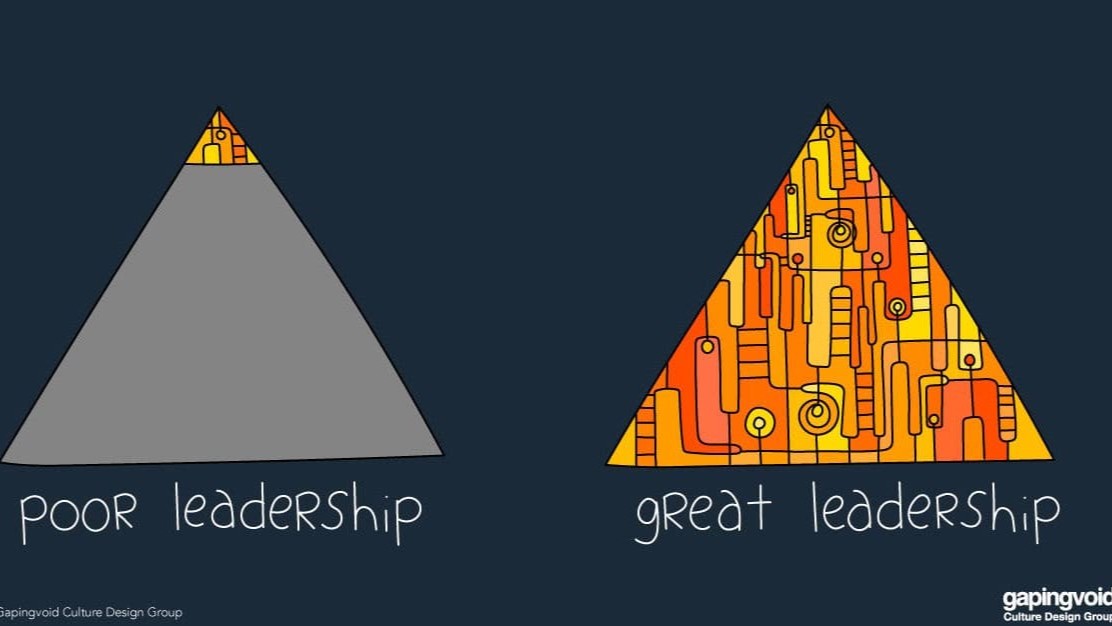
Here’s the hard truth: real leadership isn’t about individual brilliance — it’s about building the collective capability to adapt, learn, and perform.
So if your goal is to actually build leadership (not just leaders), here are eight principles to guide your thinking — drawn from years of consulting experience, research, and feedback from working with leadership teams across multiple industries.
And no, this isn’t a checklist. These principles work together, or not at all.
1 The organisation is the benefactor
Leadership development isn’t about giving high potentials a leg up — it’s about lifting performance across the business. That means development must have a line of sight to strategy, execution, and results. Want ROI? Measure how leadership changes the game — not just how someone feels about themselves.
2 Shared purpose. No hidden agendas.
The most dysfunctional leadership teams we work with aren’t full of bad people — they’re full of people pulling in different directions. Get clear on the vision. Be explicit about each person’s role in achieving it. And watch out for hidden agendas — they erode trust faster than failure.
3 Leadership is a team sport
This is not the Olympics — but if it was there’s only a team gold – there are no solo gold medals in leadership. If your exec team isn’t operating as a collective, you’ll see it in the gaps: misaligned decisions, missed opportunities, duplicated effort. Every leader needs to lead like they’re second-in-command of the whole business — not just their slice of the pie. Over representation of what they want for their team at the lead team meetings creates silos and competition. Leaders need to represent the lead team back in their functions as a primary focus – not the other way around.
4 Leadership’s job is to create the conditions
Weak leadership teams think their job is to run the business. Strong ones know they exist to create the environment for others to run it — to set direction, clear roadblocks, and enable others to own their piece. Think gardeners, not puppet masters.
5 Self-awareness is not optional
You can’t lead others if you don’t understand how you lead. And you can’t change what you don’t see. This is about owning your impact — not just your intention — and learning to adapt your approach for the sake of the team, not your ego. Get a clearer idea of your sub-conscious biases and manage them in the decision-making process. They are not a weakness unless you let them dilute your effectiveness.
6 Values alignment means doing the work
It’s easy to put values on the wall. But organisations don’t actually have values – people do. This means being honest about what drives you, listening to what drives others, and navigating the inevitable values clashes with maturity. Ask yourself: Are my values helping or hindering my leadership? Am I treading on other people’s values?
7 Learning is a competitive advantage
The best teams don’t avoid risk — they manage it. They experiment. They fail fast. They learn faster. But here’s the kicker: If the exec team can’t model this, the rest of the business never will. If you want a learning culture, it starts in the boardroom, not the smoko room.
8 Performance must be transparent
If you can’t see it, you can’t lead it. Leadership teams need timely, honest data — even when it’s uncomfortable. Especially when it is. You can’t optimise what you don’t measure — and you can’t grow if you’re hiding from your own reflection.
Final Thought: Leadership is Reflexive
Great leadership is never static. It’s not about ticking boxes — it’s about learning in motion.
The best teams we’ve worked with build reflexivity — the ability to reflect, adapt, and act together. They don’t wait for direction. They create clarity. They lead forward.
So if you want to move beyond leadership development as usual, stop developing leaders in isolation.
Start building leadership as a collective capability.