Introduction
Autopilot works brilliantly—if your destination is fixed. But leadership and life don’t offer fixed coordinates. They evolve, shift, surprise. If your internal navigation system—your thinking—is still running outdated programming, it doesn’t matter how well you stay on course. You’re probably heading in the wrong direction.
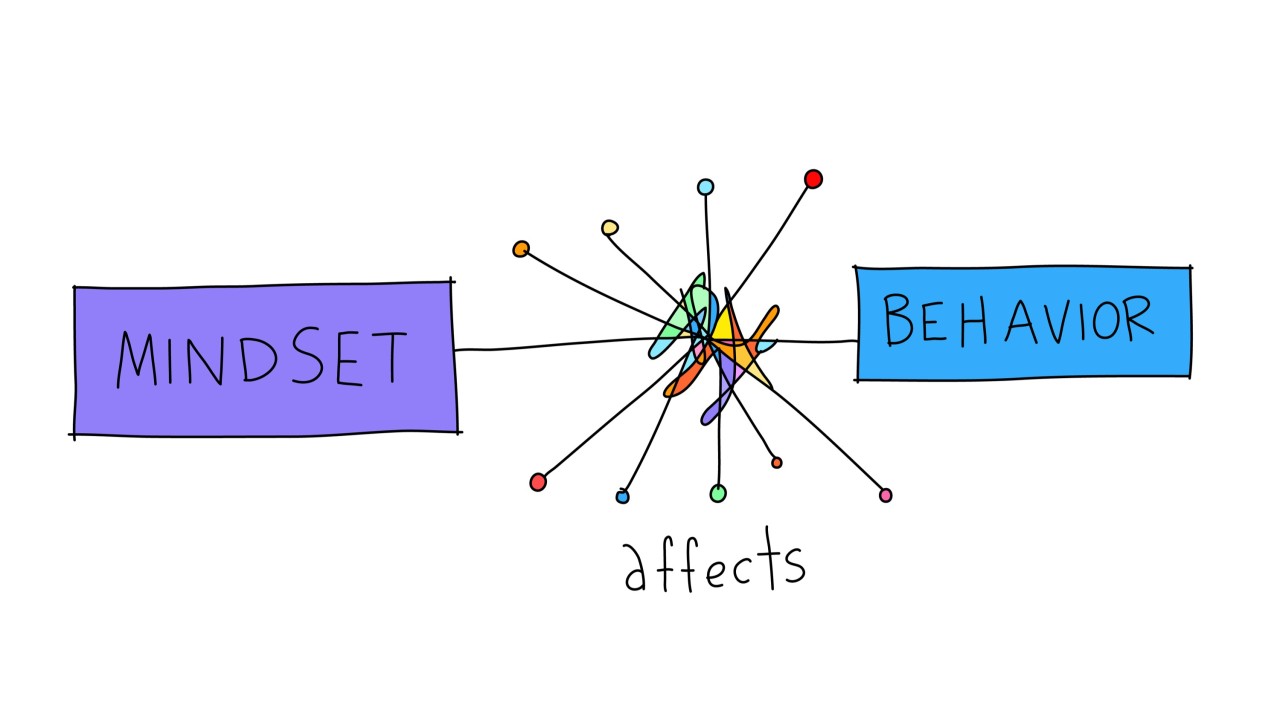
Most professionals pride themselves on being responsive. But too often, their reactions are automatic—not intentional. That’s because behaviour doesn’t begin with events. It begins with interpretation.
Enter: S + T = R.
Situation + Thinking = Response.
It’s the cognitive framework behind how we show up. Ignore the ‘T’ and you’re just reacting. Examine the ‘T’ and you unlock the possibility of leading—yourself and others—with clarity.
The Hidden Equation Behind Every Response
Behaviour isn’t spontaneous. It’s scripted—by beliefs, assumptions, and mental models. The challenge? Most of those scripts were written unconsciously, by culture, by habit, by untested stories we’ve told ourselves for years.
That’s why two smart people can face the same situation and respond in radically different ways. One gets defensive. One leans in. One sees risk. The other sees potential. The difference isn’t the situation. It’s their internal script.
And here’s the kicker: most of that thinking isn’t conscious. It’s built from shortcuts—biases, stereotypes, and old filters we’ve never paused to challenge. Left unexamined, this becomes our autopilot. Useful for routine. Dangerous for complexity.
S + T = R asks us to stop living as if S = R. It slows the moment between trigger and action—and gives us a choice.
From Reaction to Response
Take a group of people in the same room, facing the same pressure:
- Person A thinks: “This is too much.” They shut down.
- Person B thinks: “This is challenging, but solvable.” They step in.
- Person C thinks: “I’m getting blamed.” They get defensive.
- Person D thinks: “Not my issue.” They disengage.
- Person E thinks: “Here’s a chance to do something good for our clients.” They take the lead.
The moment was the same. The response was not. Thinking made the difference. And the interesting part is that this is your leadership team.
This plays out daily—in meetings, in conflict, in decision-making, in those subtle moments that shape culture and performance. Leaders who understand this don’t just react better. They lead better.
Reframing: A Practical Discipline
Reframing is not denial. It’s choosing a more useful interpretation.
A failed project doesn’t have to mean failure—it can mean refinement. An awkward conversation doesn’t have to signal dysfunction—it can be a turning point.
Facts don’t change. But the meaning we assign to them determines the field we operate on.
The Mindset of Intentional Leaders
Leaders operate in a storm of competing demands: change, complexity, pressure. The best don’t just act. They pause. They examine. They think before they respond.
Because they understand their mindset shapes more than their mood—it shapes their culture. Teams don’t follow action plans. They follow energy. Tone. Framing.
At HSI, we see this shift in real time. When leaders reframe how they think, they reframe how they lead. And the results are tangible: alignment sharpens, culture lifts, and performance improves.
Upgrade the Thinking. Shift the Outcome.
You can’t control every situation. But you can control how you see it—and how you respond to it.
S + T = R is not just a model. It’s a mental operating system. A leadership discipline. A performance advantage.
Those who master it don’t just manage better—they think better. And thinking better changes everything.
If this resonates, let’s talk. Not about theories—but about thinking. The real, internal, strategic thinking that transforms how people show up, lead, and perform.
And here’s a sharper question to leave you with: Are you aware of how effective your current thinking is? Not just how smart it sounds, but how well it’s working—for you, your team, your outcomes?
Because in the end, it’s not the situation that defines you. It’s how you think about it.