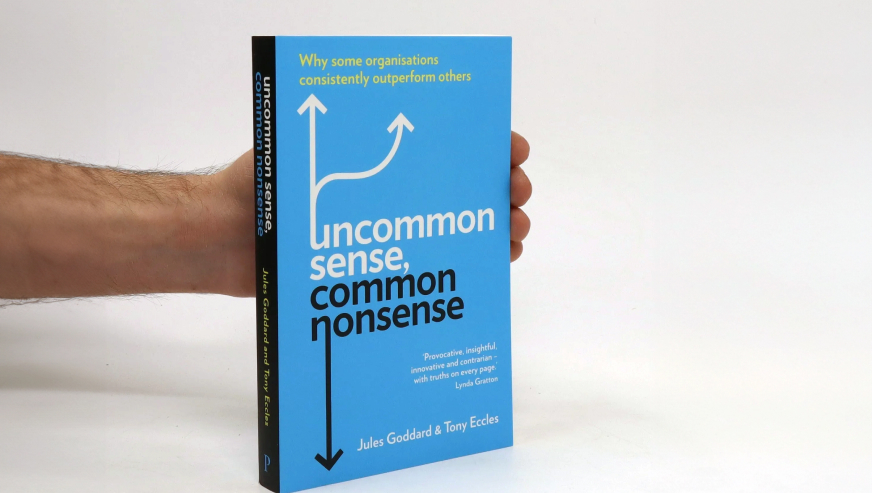
Let’s cut to the chase—Uncommon Sense and Common Nonsense is the book you read when you’ve had it up to here with corporate BS.
Jules Goddard and Tony Eccles throw down the gauntlet, calling out the “common sense” nonsense that has infected management thinking for decades. And guess what? They’re right. This book is the grenade you’ve been waiting to throw into your boardroom. If you’ve been swimming in the shallow end of leadership theory, get ready to dive deep and unlearn almost everything you’ve been told.
The authors rip apart the safe, predictable frameworks that most leaders cling to, exposing them as nothing more than a security blanket for scared executives. They lay it bare: the typical MBA-driven approach to business is stifling innovation, crushing motivation, and destroying long-term success. You’re either chasing shareholder value at the expense of people or putting up yet another PowerPoint on strategic planning that no one really cares about. What Goddard and Eccles offer instead is “uncommon sense”—a no-nonsense approach that might make you uncomfortable, but that’s precisely the point.
Now, let’s get edgy from a Human Synergistics LSI perspective because Uncommon Sense and Common Nonsense aligns with a blunt truth: the worst leadership behaviours, those driven by Passive-Defensive or Aggressive-Defensive thinking, are killing your organisation. LSI (Life Styles Inventory) shines a light on the way leaders think and behave, and Goddard and Eccles are essentially calling out leaders stuck in avoidance, conventionality, and oppositional thinking. These folks operate out of fear, clinging to safety nets like rigid processes and quarterly targets, and the result is a culture that’s toxic, reactive, and straight-up counterproductive.
From an LSI lens, this book is like a wake-up slap for those stuck in the defensive clusters. The authors are saying: if your organisational mindset revolves around survival and control, you’re dead in the water. Take that Oppositional thinking—the “poke holes in every idea” mindset—Goddard and Eccles would tell you that’s the nonsense that strangles innovation. Or take Power and Competitive tendencies—great, you’ve built your little empire, but you’ve alienated everyone on the way up. The result? A disengaged team and a company culture that resembles the walking dead.
Uncommon Sense and Common Nonsense urges leaders to shift to a more Constructive mindset, which any LSI practitioner would tell you is where the magic happens. This means fostering Achievement, encouraging Self-Actualisation, and focusing on Humanistic-Encouraging leadership behaviours. Goddard and Eccles argue that the companies winning today are the ones who’ve figured this out: they’re
obsessed with building unique capabilities, nurturing talent, and unleashing creativity. And yeah, they’re not following your traditional rules—they’re rewriting them.
The book hits on the very themes we embody at Human Synergistics: if you want a high-performing culture, stop operating out of fear and compliance. Instead, focus on personal responsibility, growth, and collaboration. Goddard and Eccles would say that the leaders who are succeeding are the ones who can step out of the mindless treadmill of quarterly reviews and take the risk of experimenting, of being vulnerable enough to admit they don’t have all the answers. In other words, get out of your defensive mindsets, stop defending the status quo, and start leading with vision, not from the rearview mirror.
That said, the book isn’t an easy ride. Goddard and Eccles don’t give you a cozy step-by-step roadmap. They push you to think—and that can be uncomfortable for people who’ve spent their entire careers sticking to the corporate script. But that’s exactly the point. This book is a manifesto for those ready to step into the uncomfortable but essential space of unlearning, rethinking, and reimagining. It’s not for the faint of heart, but it’s damn sure for those who want to win in today’s complex, fast-paced world.
So, if you’re ready to ditch the corporate crutches, face your LSI shadow, and start thinking like a leader who actually wants to drive change rather than just manage it, Uncommon Sense and Common Nonsense is your next read. Goddard and Eccles don’t just suggest a shift in tactics—they demand a revolution in thinking. Are you brave enough to embrace it? Or are you too busy being “right” while the world passes you by?